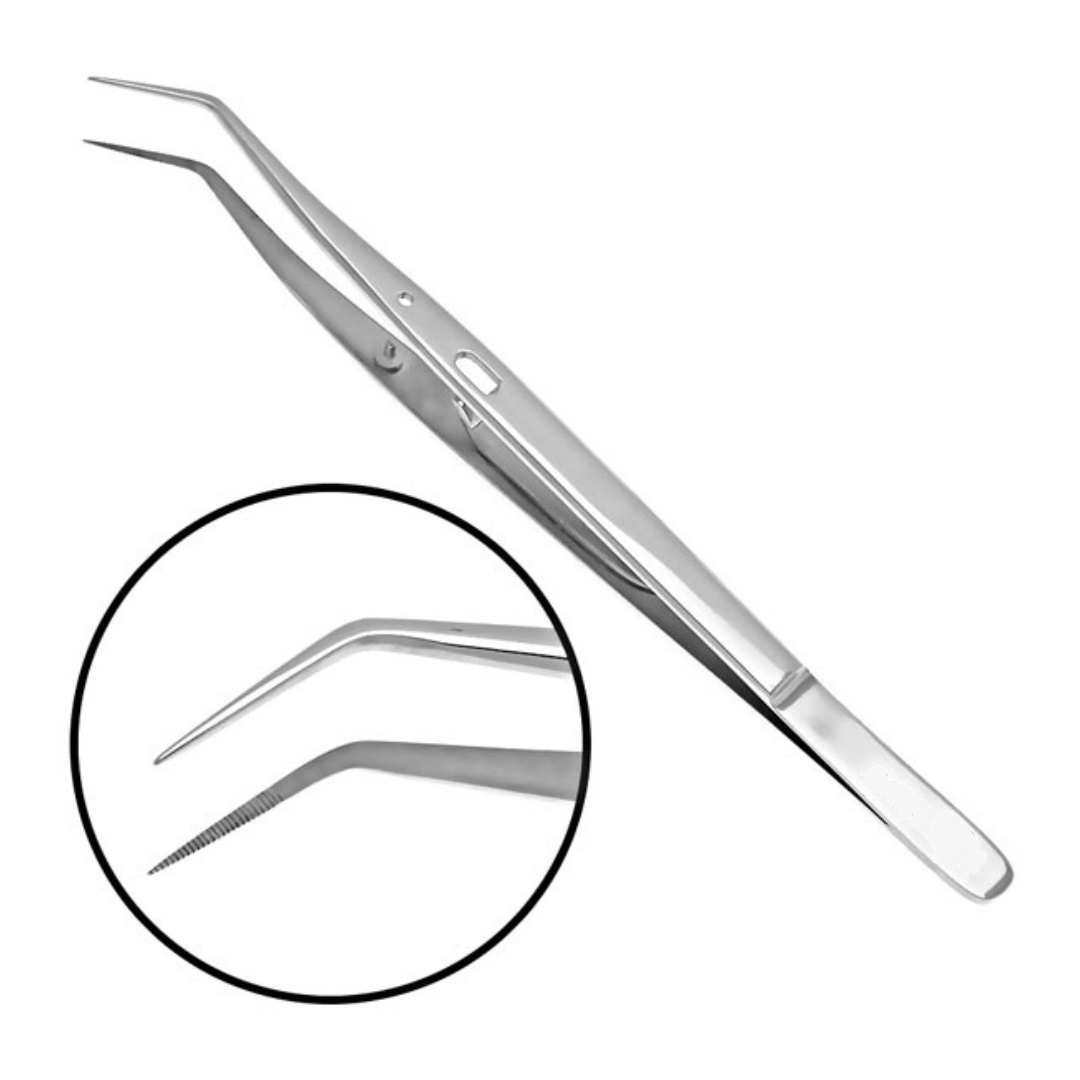

Utility Meriam Dressing Pliers (Angled) and Tweezers
Utility Meriam Dressing Pliers (Angled) and Tweezers
SKU:2513
Couldn't load pickup availability
Meriam Dressing Pliers – Angled Dental Cotton Tweezers
Meriam dressing pliers are a specialized dental instrument designed for precise handling and placement of cotton rolls, gauze, and small materials within the oral cavity. Compared to standard college pliers, the Meriam design features angled, tapered tips that improve access to hard-to-reach areas, making them ideal for more controlled and accurate procedures.
These pliers are widely used in dental examinations, restorative treatments, and general chairside workflows. The serrated tip ensures a secure grip, even in moist conditions, reducing slippage during clinical use.
Constructed from high-quality stainless steel, Meriam dressing pliers offer excellent durability, corrosion resistance, and long-term performance. They are fully autoclavable and suitable for repeated sterilization without compromising structural integrity.
✔️ Key Features
- Angled, serrated tips for enhanced grip and precision
- Ideal for cotton rolls, gauze, and small materials
- Improved access to confined intraoral areas
- Ergonomic design for better handling and control
- Stainless steel construction – durable and corrosion-resistant
- Fully autoclavable for clinical use
📊 Specifications
| Feature | Details |
| Instrument Type | Meriam Dressing Pliers |
| Also Known As | Cotton Tweezers |
| Tip Design | Angled & Serrated |
| Material | Stainless Steel |
| Sterilization | Autoclavable |
| Packaging | 1 per pack |
| Usage | Dental & clinical use |
🦷 Applications
- Handling cotton rolls and gauze
- Placement in hard-to-reach areas
- General dental and clinical procedures
- Chairside assistance and material transfer
FAQ
1. What are Meriam dressing pliers used for?
They are used to handle and place cotton, gauze, and small materials during dental procedures.
2. How are they different from college pliers?
Meriam pliers have angled tips, allowing better access to confined areas.
3. Are they autoclavable?
Yes, they are fully sterilizable and suitable for repeated use.
4. What material are they made from?
They are made from stainless steel for durability and corrosion resistance.
5. Are they suitable for daily use?
Yes, they are designed for routine clinical procedures.
Share