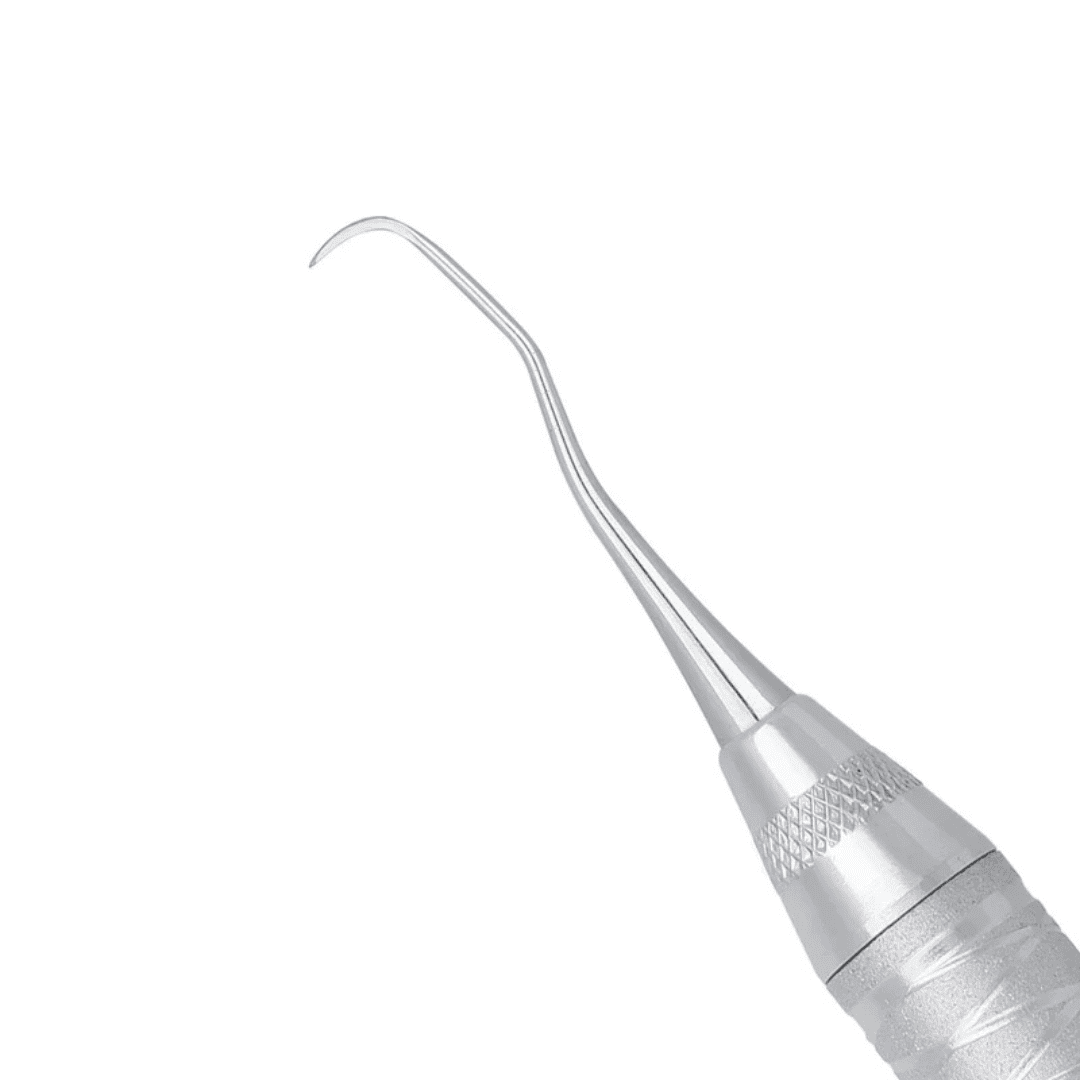


Gracey Curette 1/2 – Stainless Steel Periodontal Curette for Anterior Teeth
Gracey Curette 1/2 – Stainless Steel Periodontal Curette for Anterior Teeth
SKU:1995
Couldn't load pickup availability
- Free shipping $150+ (QC) / $250+ (Canada)
- Trusted by dental professionals since 1990
- Questions? Call 514 431-4188
Gracey Curette 1/2 – Stainless Steel Periodontal Dental Instrument
The Gracey Curette 1/2 is a precision periodontal instrument designed for scaling, root planing, and subgingival calculus removal on the facial, lingual, and proximal surfaces of anterior teeth. As an area-specific curette, the Gracey 1/2 provides excellent adaptation and control, making it an essential instrument for periodontal therapy and routine dental hygiene procedures.
Manufactured from premium surgical-grade stainless steel, this reusable periodontal curette offers outstanding durability, corrosion resistance, and long-lasting clinical performance. Its precision working ends provide excellent tactile sensitivity for effective calculus removal while minimizing trauma to surrounding soft tissue.
Designed for dental hygienists, general dentists, periodontists, and dental schools, the Gracey Curette 1/2 is a trusted instrument for everyday periodontal care.
Features
- Gracey Curette 1/2
- Area-specific periodontal curette
- Designed for anterior teeth
- Precision working ends
- Excellent tactile sensitivity
- Surgical-grade stainless steel
- Corrosion resistant
- Fully autoclavable and reusable
- Professional periodontal instrument
- Ideal for scaling and root planing
Applications
Ideal for:
- Scaling
- Root planing
- Subgingival calculus removal
- Periodontal therapy
- Dental hygiene procedures
- Preventive dentistry
- Anterior teeth instrumentation
- General dentistry
- Periodontal maintenance
Specifications
| Specification | Details |
|---|---|
| Instrument Type | Periodontal Gracey Curette |
| Pattern | Gracey 1/2 |
| Design | Area-Specific Curette |
| Material | Surgical Grade Stainless Steel |
| Recommended Area | Anterior Teeth |
| Sterilization | Steam Autoclavable |
| Reusable | Yes |
| Professional Use | Dental Clinics & Hygiene Practices |
Why Choose the Gracey Curette 1/2?
The Gracey Curette 1/2 is specifically designed for anterior teeth, allowing clinicians to perform precise scaling and root planing with exceptional control. Its area-specific blade adapts closely to root surfaces, helping remove subgingival calculus efficiently while preserving surrounding tissue. Manufactured from premium stainless steel, it delivers excellent durability, tactile sensitivity, and dependable performance for daily periodontal procedures.
Frequently Bought Together
Complete your periodontal instrument setup with:
- Gracey Curette 11/12
- Gracey Curette 13/14
- H6/H7 Hygienist Scaler
- 204S Sickle Scaler
- Columbia Curette 13/14
-
Mouth Mirror Handle
Compare Gracey Curettes
| Looking For... | Recommended Instrument |
|---|---|
| Anterior teeth | Gracey 1/2 |
| Anterior & premolars | Gracey 5/6 |
| Posterior facial & lingual | Gracey 7/8 |
| Posterior mesial surfaces | Gracey 11/12 |
| Posterior distal surfaces | Gracey 13/14 |
Frequently Asked Questions
What is the Gracey Curette 1/2 used for?
The Gracey Curette 1/2 is used for scaling, root planing, and removing subgingival calculus on the facial, lingual, and proximal surfaces of anterior teeth during periodontal treatment.
Is this curette area-specific?
Yes. The Gracey Curette 1/2 is an area-specific periodontal curette designed specifically for anterior teeth.
Is this instrument autoclavable?
Yes. It is manufactured from surgical-grade stainless steel and is fully autoclavable for repeated professional use.
Who uses this instrument?
The Gracey Curette 1/2 is commonly used by dental hygienists, general dentists, periodontists, and dental schools.
Why Dental Professionals Choose 3BS Dahabi
✔ Surgical Grade Stainless Steel
✔ Precision Area-Specific Working Ends
✔ Excellent Tactile Sensitivity
✔ Fully Autoclavable & Reusable
✔ Professional Periodontal Quality
✔ Fast Shipping Across Canada
Shipping & Delivery
Shipping & Delivery
Free shipping on orders over $150 in Quebec, and $250+ anywhere else in Canada. Orders are shipped from our Montreal warehouse.
Share